ThangBut
March 11
nice game
treespuzzle.com
An unusual puzzle game series where you solve mysteries by moving and combining objects inside strange, hand-drawn rooms.
Last updated: 2026-03-18
If you get stuck, watch the video guide here
Download Full Game Windows version, playable directly after download
Puzzle House and Puzzle Dream run here with no download.
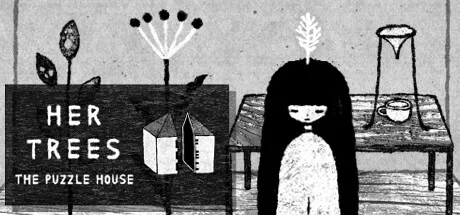
Play HER TREES : THE PUZZLE HOUSE free in your browser — no download. A compact surreal puzzle house built on symbols, spatial logic, and observation.
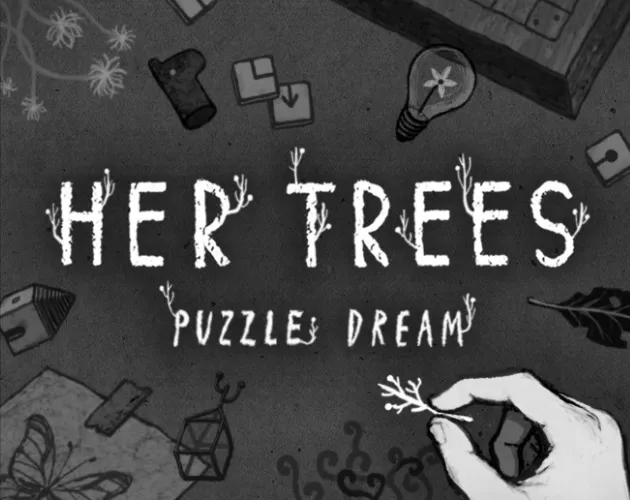
Play HER TREES : PUZZLE DREAM free in your browser — no download. 40+ hand-drawn puzzles in the largest entry of the series.
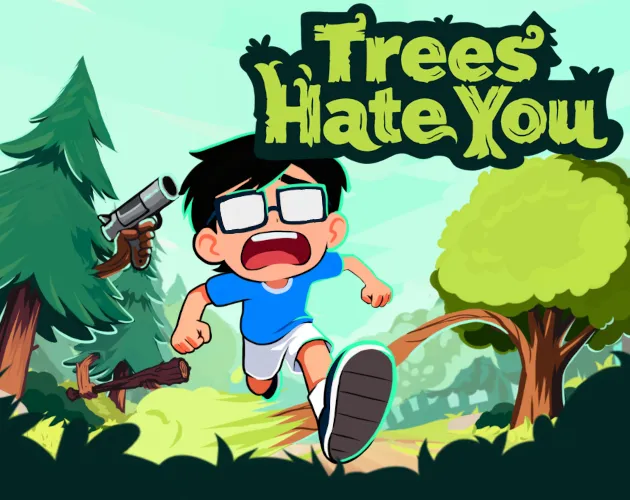
A very different pick from the HER TREES series pages: a fast-restart comedy trap game where the forest itself is the joke, the threat, and the punchline.
HER TREES is a puzzle game series by the independent creator Stone. Its core interaction is not traditional hidden object play or heavy inventory management, but solving rooms by moving, arranging, and combining the objects already inside the scene.
Across the series, the identity stays consistent: black-and-white hand-drawn art, low-text or textless presentation, dreamlike surreal atmosphere, and puzzle design built around observation, spatial relationships, and intuition instead of complex calculation.
Observation-driven point-and-click puzzle design centered on shapes, symbols, and spatial relationships.
Rooms and scenes function as puzzle structures themselves, with answers hidden in placement, order, and adjacency.
Low friction but still capable of real aha moments, without requiring difficult math or pages of notes.
The overall tone feels closer to an interactive black-and-white picture book than a noisy conventional puzzle game.
Start with HER TREES : First Puzzle. It is the series entry point, short enough to finish in one sitting, and the clearest introduction to the move-and-combine puzzle logic.
Start with HER TREES : THE PUZZLE HOUSE or HER TREES : PUZZLE DREAM. Both later entries are described as approachable even if you have never played the earlier games.
THE PUZZLE HOUSE works well as a representative short-form entry, while PUZZLE DREAM is the largest game so far and also offers a demo path for cautious newcomers.
| Game | Platform | Playtime | Access | Best First For |
|---|---|---|---|---|
| HER TREES : First Puzzle | HTML5 / Windows | About 1 hour | Free to play and playable in the browser | Players who want the easiest possible entry point |
| HER TREES : THE PUZZLE HOUSE | Steam | About 1 hour | Full release with hints and answers | Players who want the most representative compact game |
| HER TREES : PUZZLE DREAM | Steam / itch.io Demo | 1.5 to 3 hours | Largest entry so far with 40+ puzzles and a demo | Players who want the fullest version of the formula |
Observe first, understand after. HER TREES treats the whole screen as part of the rule set. Shapes, placement, sequence, and adjacency matter more than dialogue, so each solution feels discovered rather than instructed.
The appeal of HER TREES is not inventory management. It comes from rearranging elements until the hidden rule reveals itself.
This series communicates mainly through images, shapes, and spatial relationships instead of long text, color dependency, or audio cues.
Most entries can be finished in one focused sitting, giving you a full arc without asking for a huge time commitment.
Public descriptions repeatedly frame the series as observation-first puzzle design, so it is not the kind of game that expects heavy arithmetic or constant note taking.
Later entries explicitly describe themselves as non-verbal, and the first game also presents itself as text-light, which makes the series easier to approach across languages.
Publicly listed features note that the games do not rely on color recognition or audio-based puzzle solving, and the first game is marked as color-blind friendly, one-button, and textless.
The appeal of HER TREES is not inventory management. It comes from rearranging elements until the hidden rule reveals itself.
This series communicates mainly through images, shapes, and spatial relationships instead of long text, color dependency, or audio cues.
Most entries can be finished in one focused sitting, giving you a full arc without asking for a huge time commitment.
Public descriptions repeatedly frame the series as observation-first puzzle design, so it is not the kind of game that expects heavy arithmetic or constant note taking.
Later entries explicitly describe themselves as non-verbal, and the first game also presents itself as text-light, which makes the series easier to approach across languages.
Publicly listed features note that the games do not rely on color recognition or audio-based puzzle solving, and the first game is marked as color-blind friendly, one-button, and textless.
This homepage is part of an independent editorial site covering the HER TREES series. Alongside the overview and playable entry point, the site includes policy pages, original analysis, and a dedicated guide page so visitors and reviewers can evaluate the site as a complete publication.
Players who enjoy observation, pattern recognition, and spatial puzzle logic.
People looking for short indie games with a strong sense of completion.
Anyone drawn to black-and-white, dreamlike, surreal, and quiet visual design.
Players who do not want long tutorials or walls of text.
People seeking puzzle games that do not rely on color recognition or audio clues.
Fans of Rusty Lake, Cube Escape, or room-puzzle games who want something calmer and more abstract.
If you want more than the landing page, continue to the guide page, design analysis, site background, or contact page.
Open the embedded video guide when you want a direct solution for the room.
See why the series feels observation-driven rather than text-heavy.
Learn who runs the site, what is original here, and how updates are handled.
Use the site contact page for corrections, rights requests, or technical issues.
HER TREES is a hand-drawn puzzle series focused on observation, object movement, and visual combinations, somewhere between room escape, point-and-click, and surreal art puzzle design.
No. Later entries are still approachable for new players, and you can always return to the earlier games if you want to see how the series evolved.
Not really. The series deliberately keeps language minimal, so progression comes mostly from noticing relationships in the scene rather than reading instructions.
It works well for players who like short atmospheric puzzles, gentle difficulty curves, and figuring things out through observation rather than explicit tutorials.
Yes. First Puzzle, Puzzle House, and Puzzle Dream all play free in your browser on this site. No download. Steam sells separate paid builds of the later games.
Yes. People also search hertrees, her tree, and her trees game. They all refer to the HER TREES series on this site.
HER TREES : First Puzzle takes about 1 hour. THE PUZZLE HOUSE takes about 1 hour. PUZZLE DREAM takes 1.5-3 hours with 40+ puzzles.